
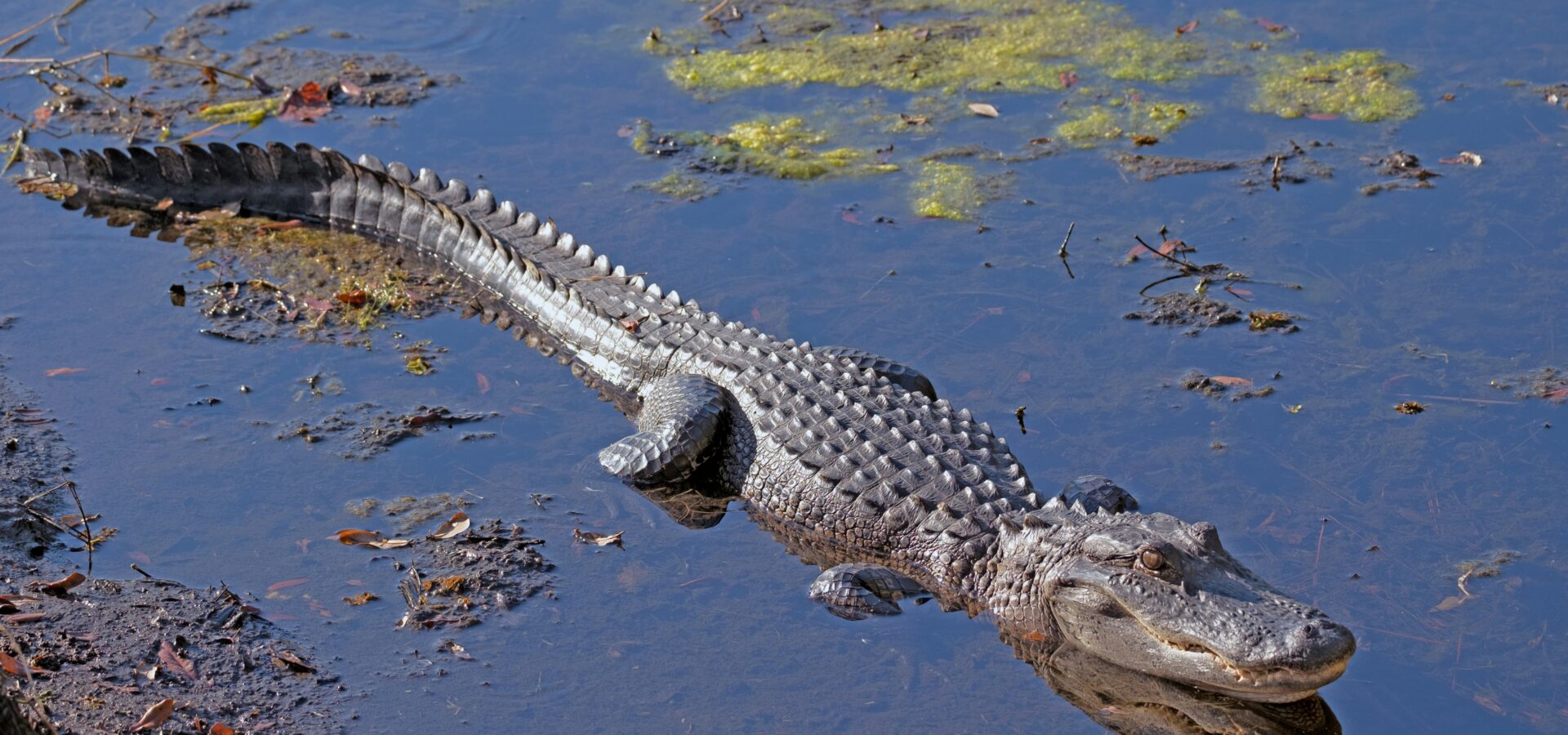
For wild alligators near Miami, start with Shark Valley or Anhinga Trail in Everglades National Park. Choose Shark Valley if you want walking, cycling, or a tram tour. Choose Anhinga Trail for a shorter wildlife walk.
If an airboat ride is part of your wish list, compare an organized excursion. If you prefer scheduled animal presentations, an attraction with captive alligators offers a different experience.
This guide to where to see alligators in Miami covers five places outside the city’s central neighborhoods. My advice is to choose one main destination, confirm transportation, and leave time to watch the wildlife. Trying to squeeze several distant entrances into one afternoon can turn a relaxed outing into a day in the car.
Wild sightings are never guaranteed. Established trails and viewing areas give you a sensible way to look, without approaching random canal banks.
Where to see alligators near Miami at a glance
| Destination | Type of viewing | Best fit |
|---|---|---|
| Shark Valley | Wild alligators | Walking, cycling, or a guided tram ride |
| Anhinga Trail | Wild alligators | A short, accessible wildlife walk |
| Everglades Safari Park | Wildlife along the boat route; separate shows | An airboat and attraction visit |
| Everglades Alligator Farm | Captive-animal exhibits and presentations | Scheduled activities |
| Oasis Boardwalk | Wild alligators | A short stop on a longer westbound outing |
1. Shark Valley: best for choosing how you explore
Shark Valley is a strong starting point if you want to see wild alligators while exploring the Everglades landscape. Its flat, paved Tram Road accommodates walking, cycling, and tram tours. The National Park Service identifies alligators, turtles, and birds among the animals you may encounter. An observation tower offers a broader view.
I would choose the tram if your group wants commentary and less walking. If you prefer to stop whenever something catches your attention, consider a walk or bike ride. You do not need to complete the whole route to look for wildlife.
The key is to choose an activity that suits everyone’s stamina and the weather. A paved route can still feel demanding in heat and humidity.
Before you go: Check Shark Valley visitor information for access and planning details. Confirm park admission separately from tram tickets or bicycle rental. If an animal is on the route, give it space rather than trying to pass closely.
2. Anhinga Trail: best for a short wildlife walk
Anhinga Trail would be my first suggestion for someone who wants a manageable walk without a boat ride. In the Royal Palm area of Everglades National Park, the paved and boardwalk route is 0.8 miles round trip and listed as wheelchair accessible.
The trail passes sawgrass marsh and freshwater habitat, with opportunities to see alligators, turtles, fish, and wading birds. NPS highlights winter, when lower water levels concentrate aquatic wildlife, as a particularly productive period.
I would take this slowly. Stop at the viewing areas, scan the water, and use binoculars or a zoom lens. The appeal is having time to notice animals, rather than finishing the loop quickly.
Use the correct entrance: Follow directions to Royal Palm and Anhinga Trail through the park’s Homestead entrance. Shark Valley is a separate entrance. Check the official Anhinga Trail guide before setting off.
3. Everglades Safari Park: best if you want an airboat ride
Everglades Safari Park is worth comparing when the ride itself is part of the attraction. The operator lists a general-admission airboat ride of approximately 30–40 minutes, plus an alligator show, nature trails, and exhibits.
Keep the two viewing experiences separate: animals living freely along the boat route are different from animals seen in a presentation. A show being included does not guarantee a wild alligator sighting from the boat.
I would choose this option if your group would enjoy the wetlands ride even on a day when wildlife is harder to spot. Airboats are loud; the operator says hearing protection is provided.
Plan the return journey: The Safari Park FAQ warns visitors not to rely on an Uber pickup from the attraction. Arrange a round trip, drive, or confirm transport with your provider. Check ticket inclusions, extra charges, and age or health restrictions before paying.
4. Everglades Alligator Farm: best for scheduled presentations
Everglades Alligator Farm, in the Homestead area, offers an attraction-based visit with captive alligators. Its advertised activities include airboat rides, alligator shows, and feeding demonstrations.
This is a separate attraction near Everglades National Park. It is not the same experience as walking a national park trail and looking for animals living freely.
I would consider it for visitors who prefer exhibits and a schedule to patiently searching for wildlife. Look through the Alligator Farm’s current activities to decide whether the presentation format suits your group.
Choose by experience: Check which activities your ticket includes and when presentations run. If your priority is observing wild alligators, start with Shark Valley, Anhinga Trail, or Oasis instead.
5. Oasis Visitor Center Boardwalk: best for a Tamiami Trail stop
Farther west, the boardwalk in front of Oasis Visitor Center provides another place to look for wild alligators. It sits in Big Cypress National Preserve, a separate protected area from Everglades National Park.
NPS describes the boardwalk as about 200 yards long, with opportunities to spot alligators, fish, birds, and turtles. Its short length is appealing if you want to spend time observing without committing to a long hike.
I would work Oasis into a westbound Tamiami Trail outing. The boardwalk may be short, but reaching it is a separate journey from a hotel in Downtown or Miami Beach.
Before you go: Check the Oasis boardwalk visitor guide and current access information. Use the designated viewing area and parking, rather than stopping on a road shoulder or approaching the canal bank.
When is the best time to see alligators near Miami?
Winter and early spring are my preferred starting points for a first visit. The Everglades’ dry season typically runs from December through April, although its timing varies. NPS describes this as a popular wildlife-viewing period with more comfortable conditions and fewer mosquitoes than the wetter months.
Alligators can be seen at other times of year, but heat, rainfall, water levels, and animal behavior affect visibility. No month or departure time guarantees a sighting.
Check the park’s seasonal planning information, then choose your outing around the actual forecast and access hours. I would prioritize time to explore comfortably over a promised “perfect” alligator-viewing hour.
How to plan your alligator outing from Miami
Choose the experience first
- Wildlife without a boat: Start with Anhinga Trail or Shark Valley.
- A guided ride: Compare a Shark Valley tram tour with an airboat excursion. They offer different ways to experience the landscape.
- Scheduled animal presentations: Look at the Alligator Farm’s exhibit format and activity timetable.
- A westbound road trip: Check whether Oasis fits your route.
Confirm transportation before buying admission
If you do not have a car, compare packages with a confirmed return transfer. Check the pickup point, total outing length, named attraction, and whether entry fees are included. The boat ride’s duration is only one part of the day.
Our Everglades airboat, wildlife exhibit, and round-trip bus listing is a starting point for a packaged outing. Confirm the operator and destination before booking; this package should not be assumed to visit Everglades Safari Park.
My preference would be one main wildlife stop with a relaxed return. Avoid placing a hard-to-change dinner reservation immediately after an excursion that involves a long transfer.
Compare the full cost
For a self-guided visit, consider transport and park admission. For a guided visit, check tour charges, rentals, transfers, and any separately collected fees. Comparing headline ticket prices alone can hide a meaningful difference in the day’s total.
How to watch alligators responsibly
The Everglades wildlife safety guidance says to keep at least 15 feet from alligators and crocodiles. Treat that as a minimum, not a target for your photograph. Give animals more room whenever possible, increase your distance if they react, and follow stricter site instructions.
- Never feed, touch, surround, or try to move a wild alligator.
- Use a zoom lens instead of stepping closer.
- Stay on designated routes and keep children close.
- If an animal blocks your path, wait at a distance and seek staff guidance.
- Bring water, sun protection, insect repellent, and suitable footwear.
Do not judge an animal’s alertness by how still it appears. Keeping your distance gives you a better chance to observe natural behavior and leaves the animal room to move.
Frequently asked questions
Can you see wild alligators near Miami without a boat?
Yes. Shark Valley, Anhinga Trail, and Oasis Boardwalk offer land-based viewing opportunities. Conditions and animal activity determine what you see.
Where should first-time visitors go?
I would choose Anhinga Trail for a short walk or Shark Valley for a choice of walking, cycling, and a tram ride. Choose an airboat attraction when the boat ride matters as much as the wildlife.
Are wild alligator sightings guaranteed?
No. Animals move freely and may be out of view. Captive exhibits are a different experience and should not be confused with sightings along a boat route.
Are these places in Downtown Miami or South Beach?
No. All five require travel outside those central visitor areas. Map the exact destination from your hotel and allow time for the return journey.
Can you visit without renting a car?
A tour with confirmed round-trip transportation is one option. Check the pickup location and return arrangements before booking. Do not assume a remote attraction will have readily available rideshare pickups.
Keep your first outing simple: choose the experience, settle the transportation, and leave time to observe. Use our things to do in Miami directory for the rest of your itinerary, with city activities on a separate day if your schedule allows.
Visitor information checked September 25, 2026. Confirm access, schedules, and ticket inclusions before departure.